

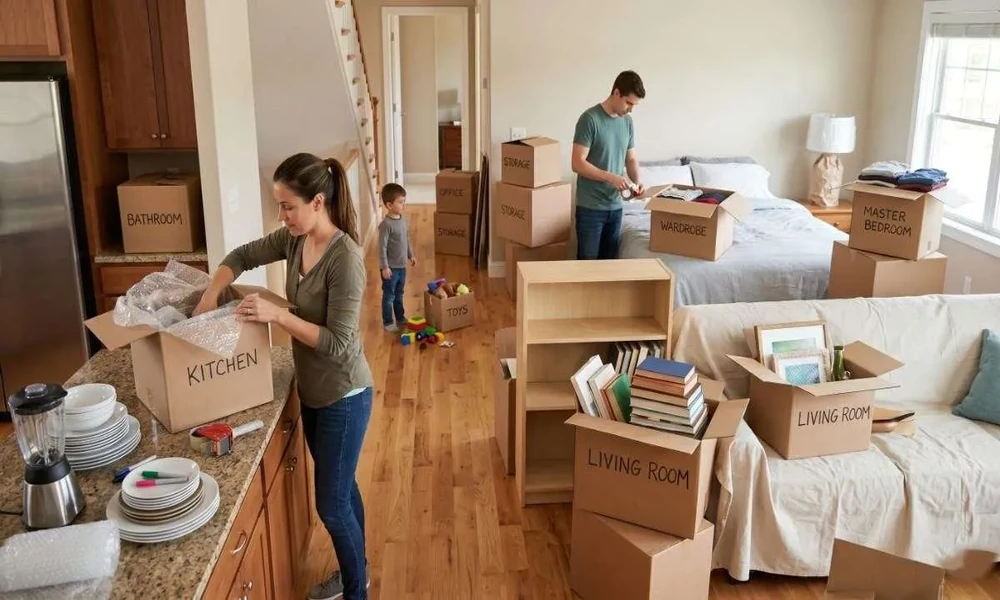
One of the time-consuming aspects of moving house is packing. A good idea for filling a few boxes can easily grow into a cluttered house with items everywhere in all of the rooms.
There are many moving day problems that start well before the removal truck. Insufficient organisation, packing too quickly and boxes without labels can result in stress when it comes to unpacking time.
Using a room-by-room strategy simplifies management. Rather than filling the house all at once, it is possible to fill one by one methodically, and be in control all along.
Start With the Least Used Rooms
An easy method is always to start packing a room that is used seldom.
Spend time cleaning out guest bedrooms, storage spaces, garages and spare rooms that may not be necessary before the move. These spaces can be filled first, without putting your daily routine to a halt.
It can help generate momentum as well. Completed boxes that are stacked and ready to go can make the job seem less daunting.
It’s possible to slowly make your way to the rooms you use most as moving day approaches.
Packing the Living Room
A combination of decorative objects, electronics, books, and furniture may be found in a living room.
Start by packing items that aren’t used every day. Decorative items, photo frames, artwork and seasonal items can typically be packed well beforehand.
For electronic items, make sure to tidy them with clearly labelled bags. It may also be helpful to take pictures of the cable connections before disconnecting the devices, so that they can be reassembled easily.
Books can be very heavy when packed in large boxes, so it is better to pack them in smaller boxes.
Packing the Kitchen
The last room many people pack and one of the most difficult is the kitchen.
First, go through the cupboards and remove those items that are past their prime and extra utensils that are not used. It’s not worth moving anything that hasn’t moved for years and years.
Be careful to wrap up delicate objects and not overstuff boxes with heavy cookware. In most circumstances, it is better to pack plates vertically than horizontally.
Have a separate box of kitchen essentials that will be required straight after moving in. Having items like a kettle, mugs, cutlery and a few basic cookware provide a much more comfortable first day.
Packing Bedrooms
Bedrooms are generally simple, though it may save time if done a little before.
Clear clothes out of closets before packing. Donating clothes that don’t fit or are not worn is a wonderful way to go about moving.
Pack out-of-season clothes first, and essentials last. Label boxes for easy removal of clothes in the new home.
Beddings should be one of the last things to be packed and one of the first things to be unpacked. It’s nice to have a bed all set up to go after a long moving day.
Packing the Bathroom
There are numerous details that you won’t want to miss out on in bathrooms.
Dispose of almost empty/expired products. It’s best to not waste the effort to take half used bottles if they could leak on the way.
Keep toiletries in sealed containers or plastic bags to further protect. Move just until the day of the move, and leave all the important items like toothbrushes, medicine and personal care products out and easy to reach.
Having a small bath kit in hand will save you from having to rummage through several boxes when it comes time to go to bed for the first time in the new house.
Garage and Storage Area Packing
The hard to sort items are frequently found in garages, sheds and storage spaces.
Items like tools, gardening supplies, sporting equipment and other household goods have a tendency to grow in number. Before packing, try to sort out and separate useful things from those that are no longer useful.
Drain fuel from equipment as needed and pack and/or dispose of hazardous materials as per local regulations. Certain items may require special handling and should not be carried along with household items.
This is especially important as these areas will likely have large objects in them, so it is worth leaving sufficient time to organise these areas suitably.
Label Everything Clearly
One of the best packing habits is to label everything, no matter what room you’re packing.
Do not leave it blank as “kitchen” or “bedroom” on a box; add a short description of the items in the room. This will make unpacking quicker and ensure that movers drop off the boxes in the right room.
A few people have used colour coded labels for additional ease of identification.
Wastage of time later because a few seconds were not invested in labelling.
A move that is More Organised!
Packing doesn’t need to be hectic. Working through your home room by room and breaking the process down into smaller tasks helps to provide structure and to lessen stress.
A bit of preparation and clear labelling can make unpacking a breeze and your new home fully organized much sooner.
When you’re moving into or out of a North Shore apartment, or relocating to another area in the North Shore region, there’s no better moving solution than professional moving service by Posch & Silva. They provide a professional team of professionals that ensures homeowners and renters can relocate with confidence, locally or interstate around Sydney. Check out their website for more information on their services for moving help on the North Shore.
