

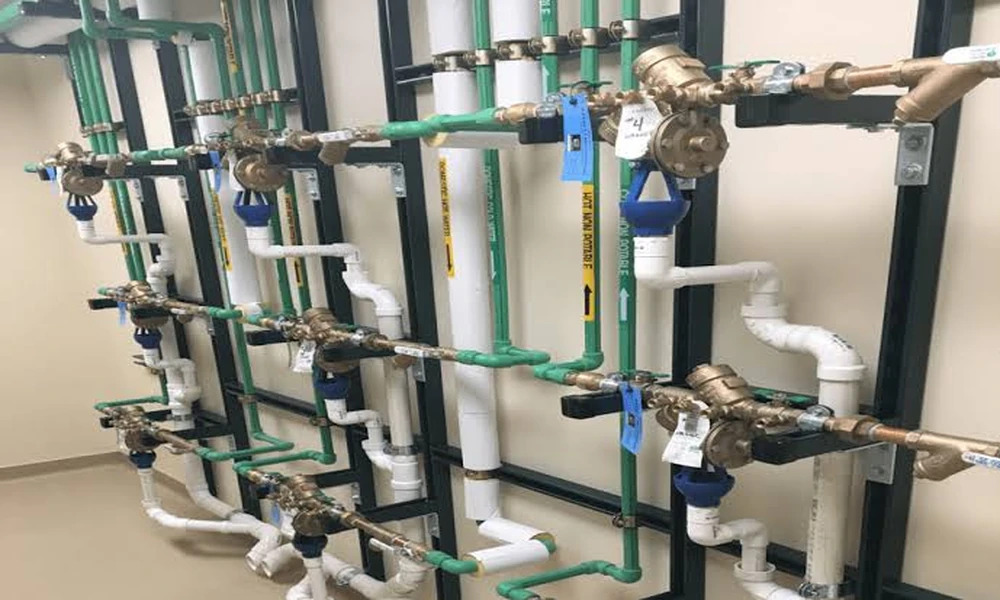
Every year, thousands of business owners and property managers in Northeast Ohio get a letter from their water supplier saying a device somewhere in their building needs testing. Many have no idea what the device is, where it sits, or why it matters. Some put the letter in a drawer. A few months later, a second notice arrives with stronger wording, and sometimes a warning about water service.
That device is a backflow preventer. It’s one of the least noticed pieces of equipment in a commercial building and one of the most tightly regulated. Restaurants, medical offices, apartment buildings, car washes and factories all depend on it to keep their own water from flowing backward into the public supply. Owners who handle commercial backflow prevention in Cuyahoga County and Lorain County have to follow both state rules and the requirements of their local water supplier, and those two layers are where most of the confusion starts.
Once you know what the device does, the yearly letter becomes routine paperwork rather than a mystery.
Why Water Can Run Backward
Water in a public system moves because of pressure. Mains push it toward buildings, and buildings use it. When that pressure suddenly drops, for example when a main breaks, a fire crew opens hydrants, or a large pump starts up nearby, the flow can reverse for a moment. Water that was inside a building can then get pulled back toward the street.
On its own, that might not matter. The danger comes from cross-connections, the points where drinking water piping meets something it shouldn’t touch. A soap dispenser line at a car wash, a chemical feed on a boiler, a dental chair, a commercial dishwasher, a lawn irrigation system and a fire sprinkler line holding stagnant water are all examples. When pressure reverses, whatever sits in those lines can move toward the public main and reach neighboring buildings.
A backflow preventer stops this. It’s an assembly of check valves, and in some designs a relief valve, that lets water move in only one direction.
The Rules Behind the Letter
Backflow requirements in Ohio come from the state environmental code. Chapter 3745-95 of the Ohio Administrative Code requires public water suppliers to run cross-connection control programs, survey customer properties for hazards, and make sure the right assemblies are installed and kept working. The Ohio Plumbing Code adds installation rules for inside the building.
Local suppliers then build their own programs on top of those rules. Cleveland Water, which serves most of Cuyahoga County and parts of the surrounding counties, has a backflow prevention program that requires a device on every commercial service connection and an annual test by a certified plumber. The plumber submits the results to the utility, and the customer gets a mail reminder when the next test is due. Cities in Lorain County, such as Elyria, run their own programs with similar annual testing for businesses and multi-family buildings. The details, including deadlines, reporting portals and fees, depend on which supplier’s meter your building uses.
The responsibility falls on the property owner. The utility tracks compliance and the plumber does the test, but keeping the assembly working and getting the report filed on time is the customer’s job.
Matching the Device to the Hazard
Not every building needs the same assembly. The level of protection depends on how dangerous the possible contamination is.
Reduced Pressure Zone Assemblies
Often called RPZ or RP devices, these are used where backflow could carry something harmful to health, such as chemicals, medical equipment discharge or industrial process water. They have two check valves with a relief valve between them that opens and dumps water if the checks fail. Hospitals, labs, plating shops and many restaurants use them. They need a floor drain or other spot where that relief discharge can go without flooding the room.
Double Check Valve Assemblies
These have two independent check valves and no relief port. They’re common on fire sprinkler lines and other lower-hazard connections where the concern is stale water rather than toxic material.
Vacuum Breakers
Pressure vacuum breakers are often found on irrigation systems at office parks, apartment complexes and retail centers. They protect against back-siphonage but have to be installed above the highest sprinkler head, and they’re usually outdoors, which matters in a Lake Erie winter.
What Happens on Testing Day
A typical annual test takes less than an hour per assembly and follows the same steps:
- The tester confirms the assembly’s make, model, size and serial number match the utility’s records.
- Water service through the device is briefly shut off, so the building usually has a short interruption.
- Calibrated gauges are attached to the test cocks to measure pressure across each check valve and the relief valve.
- The tester records whether each part holds pressure within the allowed range.
- The device is returned to service, and the results are submitted to the water supplier.
If an assembly fails, it usually means worn rubber parts, debris stuck on a check seat, or a spring that no longer closes firmly. Most failures are fixed with a repair kit and a retest the same day. Older assemblies that are no longer supported, or that were installed in the wrong orientation, may need to be replaced.
Winter Turns a Small Problem Into a Big One
In Northeast Ohio, cold weather is a common reason assemblies break. Outdoor RPZ devices on irrigation lines or service connections can crack when trapped water freezes. Many properties use insulated or heated enclosures, and irrigation devices should be drained and winterized before the first hard freeze. A cracked body in December often means a full replacement, an emergency call, and a gap in coverage the utility will want explained.
Indoor assemblies have their own risk. An RPZ that discharges into a mechanical room without a proper drain can flood the floor when its relief valve opens. That’s exactly what the device is designed to do, but it surprises facility staff who didn’t know it could happen.
Keeping the Paperwork From Piling Up
Property managers responsible for several buildings often find it easiest to schedule all of their tests in the same season, so no notice gets lost. Keep a simple record for each site with the device locations, types, serial numbers and the date of each test, which makes the next one quicker. When tenants change, especially when an office becomes a restaurant or a warehouse adds process equipment, check whether the existing assembly still fits the new hazard, because a change in use can mean a different device is required.
Handled once a year on a schedule, backflow testing takes about as much time as a fire extinguisher inspection.
