

The sound comes first. On an ice night in the southern Willamette Valley, you hear it long before you see anything. A sharp crack somewhere up the street, a pause, then the long rattling crash of a limb tearing through everything below it. Eugene heard it all through January 2024. The storm settled in on January 13 and hung on through the 17th, and a year later local utilities still called it one of the most damaging events their systems had ever seen.
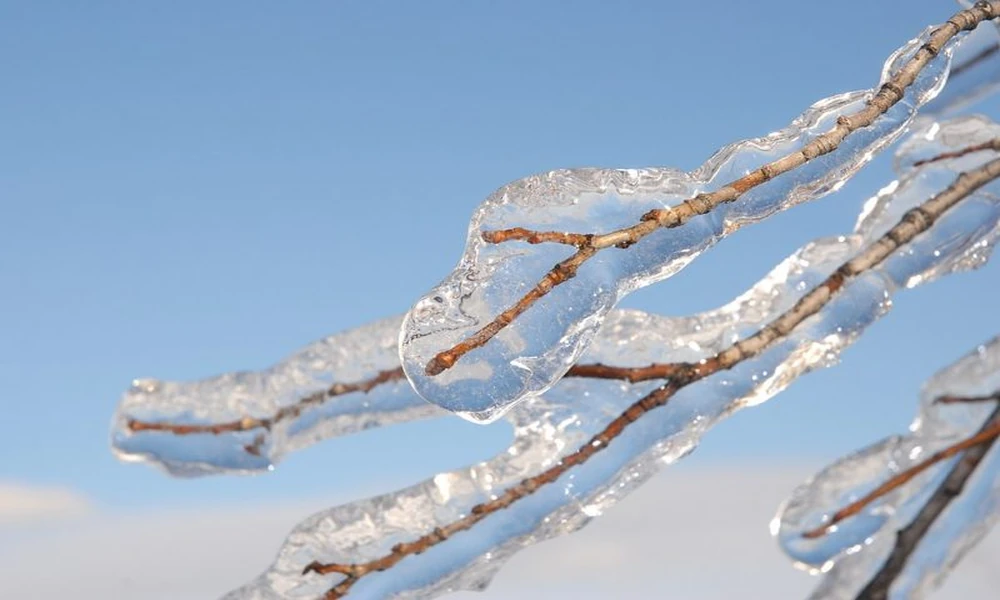
Freezing rain is uniquely hard on trees. Snow tends to slide off branches, but freezing rain wraps each twig in a shell that keeps thickening as long as the drizzle lasts. Count every small branch on a mature broadleaf and the surface is enormous, so even a modest glaze can add tons of weight to one crown.
Homeowners around Eugene who want a trained eye on their canopy before the wet months peak often call Purple Heart Tree Service, an owner-operated crew with more than fifteen years of local work behind it. Its credentials include a certified arborist and journeyman powerline clearance experience, and the work ranges from routine pruning and crown reduction to crane removals of oversized firs and storm response at any hour. Knowing why ice does so much harm is the first step toward keeping your own trees upright through the next one.
The Thaw Can Be Worse Than the Freeze
Most people assume the worst moment comes when the ice is heaviest. Often it doesn’t. As temperatures climb above freezing, limbs that were cracked but held together by their frozen shell start to let go. The Eugene Water & Electric Board saw exactly this in 2024, when the melt brought down limbs that had hung suspended by ice for days. A breeze during the thaw adds one more push to wood that is already split.
That is why walking under trees right after an ice storm is risky even with the sun out. Broken limbs caught in the canopy, which arborists call hangers or widowmakers, can drop without warning days later.
Why One Tree Bends While Its Neighbor Snaps
Species matters, but so does the way a tree grew up. After the 2021 ice storm farther north in the valley, Oregon State University Extension forester Glenn Ahrens looked closely at which trees came through and which didn’t. His guide on why some trees stand up to ice storms points to crowding as a major factor. Trees that grow up packed together end up tall and thin with small crowns, and they tend to fail completely. Trees given room to build broad crowns usually shed a few branches and keep their tops.
Douglas Fir
Eugene’s signature conifer handles snow fairly well thanks to its flexible, downward sloping branches. Tall firs crowded into rows along property lines are another story, and a snapped top falling from that height can land well away from the trunk.
Oregon White Oak and Bigleaf Maple
Broadleaf trees with forked trunks are the classic ice casualty. When two stems of similar size grow from one point, bark often gets pinched into the union, and the joint never fuses as firmly as a normal branch attachment. Under heavy ice, that seam simply splits. Bigleaf maples, with their sprawling limbs and habit of growing several leaders at once, are especially vulnerable.
Ornamental and Fast Growing Trees
Flowering cherries, birches and other quick growers tend to have softer wood and wide horizontal limbs that collect ice like shelves.
Clues Worth Looking for This Month
You don’t need climbing gear to spot many warning signs. A slow walk around each tree on a dry afternoon can tell you plenty.
- V shaped forks with a visible crease of bark running down between the stems
- Dead branches high in the crown, easy to spot because they hold no needles or dried leaves
- Mushrooms, shelf fungi or soft, spongy wood near the base
- New cracks in the trunk, or a lean that seems to have grown, especially with lifted soil on one side
- Limbs stretching over the roof, the driveway or the wires running to your house
Any one of these is a reason to have the tree examined. Two or more on a tree near the house deserves attention before the next freezing rain advisory.
Pruning That Helps and Pruning That Hurts
Good structural pruning cuts down the leverage ice can use against a tree. Crown reduction shortens the longest, heaviest limbs back to strong side branches, which lowers the weight hanging at the far end of each lever. Selective thinning removes crossing and weak branches that would otherwise catch ice. On young trees, choosing one dominant leader early prevents the forked unions that fail decades later.
Topping does the opposite. Cutting a tree back to stubs triggers a flush of fast, weakly attached sprouts that become hazards of their own within a few years. Stripping out all the interior growth and leaving foliage only at the tips, often called lion tailing, piles weight in the worst possible place. If a pruning plan sounds like it will leave the tree looking like a lollipop or a coat rack, it is the wrong plan.
Power Lines Change the Whole Equation
Trees near overhead wires belong in a category of their own. An ice laden branch that sags onto a line can energize the whole tree and the wet ground around it. Clearing distribution lines is generally the utility’s job, while the service drop to your house is handled differently by each provider, so a phone call comes before anyone picks up a pole saw. After a storm, never approach a downed wire or a tree tangled in one. Treat every line as live.
Cleaning Up Without Getting Hurt
Storm wood is nothing like ordinary firewood. A limb pinned under another limb or bent against the ground stores energy like a drawn bow, and cutting it in the wrong spot releases that tension violently. These spring poles injure experienced chainsaw users every winter. Small branches on the lawn are fair game, but anything under tension, overhead or heavier than you can comfortably lift belongs to someone with rigging and experience.
Photograph the damage before anything gets moved, since adjusters want to see where a tree landed and what it struck. Ragged stubs on surviving trees should eventually be cut cleanly back to the branch collar so the wound can close, though there is no rush to decide the fate of a tree that lost part of its crown. Many recover surprisingly well when given a full growing season to show what they still have.
Planting for the Winters Ahead
The strongest protection is chosen years in advance. Giving new trees room to develop full, balanced crowns, keeping brittle fast growers away from the house and training young trees early all pay off when the next ice event rolls in. Eugene has weathered major winter storms in 2016, 2019 and 2024, which makes the next one a question of when rather than if. A yard planned with that in mind wakes up to far less cleanup the morning after.
