

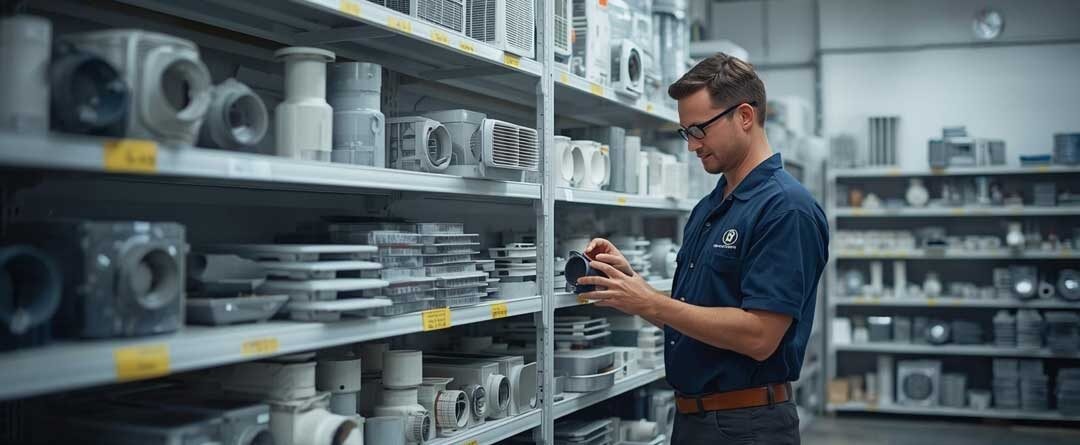
The HVAC industry has traditionally relied on local supply houses and distributor relationships. While these channels still play an important role, the rapid growth of e-commerce has introduced a new, highly efficient way to source equipment.
More contractors and property owners are choosing to buy HVAC equipment online, and the shift isn’t slowing down.
Here are the top 10 reasons why online purchasing is becoming the preferred method.
1. Wider Product Selection
Local supply houses are limited by physical space. Online suppliers are not.
When buying HVAC equipment online, you gain access to:
- Multiple brands
- Various efficiency levels
- Residential and commercial units
- Hard-to-find parts
This broader selection allows you to choose exactly what fits your project, not just what’s in stock locally.
2. Transparent Pricing
Online platforms provide clear pricing upfront.
In-store pricing can vary based on:
- Contractor account status
- Local demand
- Distributor relationships
Buying HVAC equipment online gives you consistent visibility into costs.
3. 24/7 Purchasing Convenience
HVAC emergencies don’t always happen during business hours.
Online stores allow you to:
- Research products anytime
- Compare specs late at night
- Place orders outside normal hours
This flexibility is especially valuable for contractors managing tight project schedules.
4. Easy Brand Comparisons
Online product pages typically list:
- Technical specs
- Efficiency ratings
- Voltage requirements
- Warranty information
Instead of relying on printed catalogs or verbal descriptions, buyers can evaluate options in detail.
5. Better Inventory Visibility
There’s nothing worse than driving to a supply house only to discover the part is backordered.
Online suppliers often provide real-time availability, reducing wasted trips and project delays.
6. Access to Reviews and Documentation
When purchasing HVAC equipment online, you can access:
- Installation manuals
- Specification sheets
- Technical documentation
- Product reviews
This helps buyers make informed decisions without guesswork.
7. Competitive Pricing
Online HVAC suppliers operate at scale, often allowing for:
- Competitive pricing
- Seasonal promotions
- Volume discounts
The ability to compare pricing across suppliers increases buyer leverage.
- Simplified Procurement for Contractors
Contractors managing multiple projects benefit from:
- Centralized ordering
- Order history tracking
- Digital invoices
- Repeat purchase capabilities
Buying HVAC equipment online streamlines procurement and reduces administrative work.
9. Faster Access to Specialty or Rare Parts
Some components aren’t commonly stocked locally.
Online suppliers often carry:
- Obsolete parts
- Specialty control boards
- Specific brand components
This can be a lifesaver for repair jobs involving older systems.
10. Improved Project Planning
When you buy HVAC equipment online, you can:
- Schedule delivery to job sites
- Coordinate shipments with installation dates
- Track freight status
This improves job scheduling and minimizes downtime.
When In-Store Purchasing Still Makes Sense
While online purchasing offers many benefits, there are scenarios where in-store buying remains helpful:
- Immediate emergency pickup
- Hands-on consultation
- Established local distributor relationships
The key is using both channels strategically.
Why the Shift to Online HVAC Purchasing Will Continue
E-commerce in construction and HVAC continues to grow because it aligns with modern business needs:
- Speed
- Transparency
- Scalability
- Data access
As more professionals become comfortable buying HVAC equipment online, the market will continue expanding.
Final Thoughts
The decision between in-store and online purchasing isn’t about replacing traditional supply houses; it’s about maximizing efficiency.
Buying HVAC equipment online offers:
- Greater selection
- Transparent pricing
- Better planning tools
- Access to hard-to-find inventory
- Increased convenience
For contractors and property owners alike, online HVAC purchasing represents a smarter, more flexible way to source equipment in today’s fast-moving industry.
