

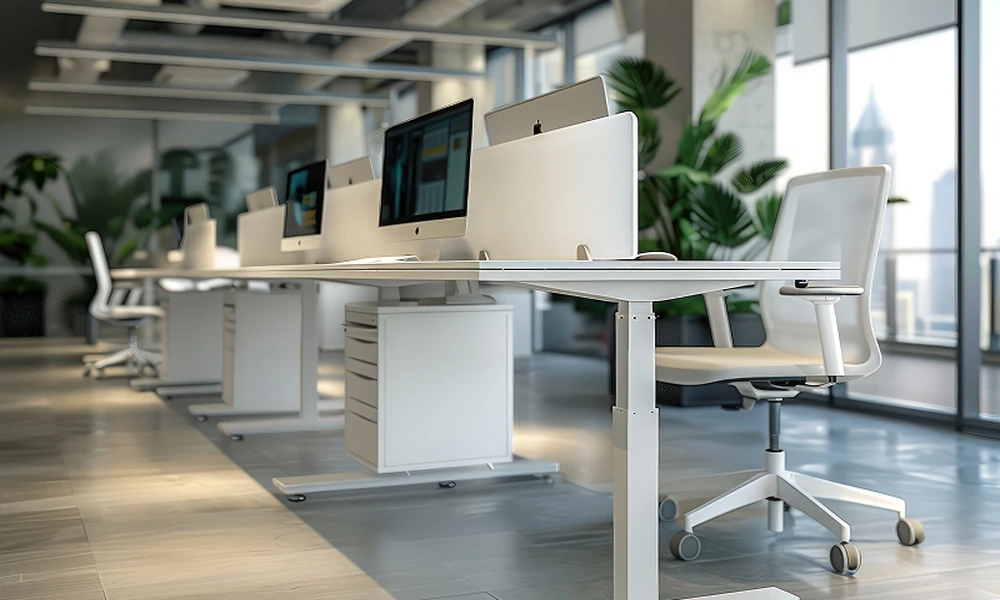
A standing desk can change how a workstation is used, but selecting one requires attention to the workspace rather than the desk alone. Businesses speaking with office furniture retailers should understand dimensions, height range, accessories and the way employees will use the desk.
For teams considering how to customise standing desk configurations, seven questions can help clarify the practical requirements before making a decision.
1. What Height Range Does the Desk Offer?
Ask for the minimum and maximum working heights. The range should accommodate the people expected to use the desk.
A desk may appear flexible, but its adjustment range needs to suit the intended users. Consider seated and standing positions if the workstation is designed for both.
2. Can the Desk Be Configured for the Workspace?
Ask about available desktop dimensions and layout options. The desk should fit the room without restricting walkways or surrounding furniture.
For smaller offices, footprint can be especially important. For larger workstations, surface area may need to accommodate monitors, keyboards, documents and other equipment.
3. What Weight Can the Desk Support?
Review the desk’s load capacity in relation to the equipment planned for the workstation.
Count monitors, monitor arms, computers, accessories and other equipment before making a decision. A suitable capacity should reflect the complete setup rather than the desk surface alone.
4. How Does the Adjustment Mechanism Work?
Ask how the desk moves between sitting and standing heights. Find out how the controls operate and how adjustments are stored or managed.
A straightforward control system can make regular changes easier for users. For shared workstations, simple operation may be particularly useful.
5. Can Accessories Be Added?
Ask about cable management, monitor arms, keyboard accessories and other components.
Accessories can affect the way the desk functions. Plan them at the same time so the final workstation remains organised and practical.
6. Can You Customise Standing Desk Dimensions?
If the standard dimensions do not suit the workspace, ask office furniture retailers about customisation options.
The phrase customise standing desk may refer to changes in size, configuration or related components. Clarify which elements can be adjusted and what limitations apply.
Customisation should respond to a genuine workspace requirement rather than add unnecessary complexity.
7. What Support Is Available After Installation?
Ask about delivery, installation, adjustment and after-sales support. A standing desk needs to be assembled and configured correctly for practical use.
Find out who should be contacted if the adjustment mechanism or another component requires attention.
Planning for Long-Term Ergonomic Success
Investing in a high-quality standing desk is only the first step toward creating a healthier, more productive workspace. Achieving lasting ergonomic benefits requires a holistic approach that goes beyond the physical desk itself. As daily routines change and work habits evolve, taking active measures ensures that employees continue to work comfortably and avoid unnecessary strain or fatigue over time.
One essential strategy is encouraging regular movement throughout the workday. Alternating between sitting and standing every 30 to 60 minutes prevents static postures, improves blood circulation, and reduces pressure on the spine. Furthermore, an adjustable, ergonomic task chair remains a critical companion to a standing desk. When seated, the chair should support the lower back, allow the feet to rest flat on the floor or a footrest, and keep knees aligned comfortably at a 90-degree angle to maintain proper posture.
Finally, scheduling periodic ergonomic assessments helps organisations adapt their setups as team needs or equipment change. Evaluating monitor heights, keyboard angles, and overall posture on a regular basis ensures the workspace continuously supports long-term employee well-being and operational performance.
Questions to Ask
Before selecting a standing desk, ask:
- What is the height adjustment range?
- Which desktop sizes are available?
- What weight can the frame support?
- How does the height mechanism operate?
- Which accessories are compatible?
- Which dimensions can be customised?
- What installation and support services are provided?
Speaking with office furniture retailers becomes more productive when the business has already identified its workspace requirements. Clear questions can help narrow the available configurations and prevent important details from being overlooked.
Contact Ergoworks to discuss how to customise standing desk requirements around your workspace layout and user needs.
