

A home remodel is a big undertaking. Whether you’re updating a kitchen, finishing a room, opening up the floor plan, adding a home office, or renovating an older Austin house from top to bottom, there is a lot to think about before the drywall goes back up.
One part of remodeling that homeowners sometimes overlook is the electrical system.
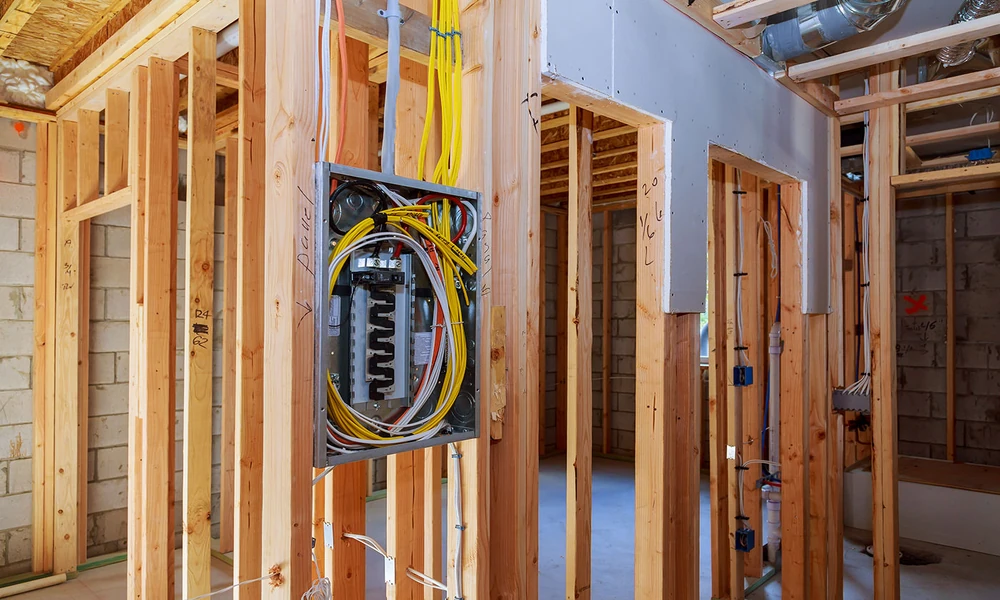
It is easy to focus on cabinets, flooring, countertops, paint, plumbing fixtures, and appliances. But once the walls and ceilings are open, you have a rare opportunity to make electrical improvements that could be extremely difficult, disruptive, and expensive to add later.
That makes a remodel an ideal time to think beyond the immediate project.
Instead of asking, “What electrical work do I need for this room today?” consider asking, “What will I wish I had wired while these walls were open?”
That simple change in perspective can lead to a much more functional home.
Start With the Outlets You Actually Need
Many older homes simply don’t have enough conveniently located receptacles for the way people use their homes today.
Think about how many devices are plugged in around a typical Austin home. Phones, tablets, computers, monitors, lamps, televisions, speakers, chargers, kitchen appliances, robotic vacuums, gaming systems, printers, and other electronics can quickly consume the available outlets.
When there aren’t enough receptacles in convenient locations, homeowners often turn to extension cords and power strips.
While power strips have their place, they shouldn’t be the permanent solution for every area of a remodeled home.
During construction, consider where outlets will actually be useful. That might mean adding receptacles near nightstands, desks, kitchen counters, islands, entertainment centers, home office workstations, or areas where you expect to charge devices.
USB-equipped receptacles may also make sense in some locations, although homeowners should consider whether today’s preferred charging technology will still be useful years from now.
The goal isn’t simply to install as many outlets as possible. It is to put them where they make sense for how the room will be used.
Add Dedicated Circuits for High-Demand Equipment
Modern homes place considerably more demands on electrical systems than many older homes were originally designed to handle.
A kitchen remodel is a good example.
Today’s kitchens may include refrigerators, dishwashers, garbage disposals, microwaves, ovens, induction cooktops, coffee makers, air fryers, warming drawers, wine refrigerators, and other appliances. Some of these appliances may require dedicated circuits or specific electrical configurations.
The same concept applies outside the kitchen.
A homeowner might eventually add a workshop, large home office, pool equipment, hot tub, additional HVAC equipment, laundry appliances, or other high-demand equipment.
During a remodel, an electrician can evaluate the existing electrical system and determine whether additional circuits, wiring, or panel capacity should be considered.
Planning these circuits while construction is underway can be considerably easier than trying to route new wiring through finished walls later.
Plan Recessed and Layered Lighting Before the Ceiling Is Closed
Lighting can completely change the way a remodeled room looks and feels.
Rather than relying on one ceiling fixture in the center of a room, consider a layered lighting plan.
A kitchen, for example, might use recessed ceiling lights for general illumination, under-cabinet lighting for countertops, pendant lighting over an island, and accent lighting to highlight architectural features.
A living room could combine recessed lighting with decorative fixtures, wall lighting, and accent lighting.
Bedrooms and home offices can benefit from a combination of general lighting and task lighting.
The important thing is to think about lighting before the ceiling and walls are finished.
Recessed fixtures require planning for placement, wiring, switching, and access. Installing them during a remodel can be much simpler than attempting to add them after everything has been painted and finished.
Consider Smart Switches, Dimmers, and Automated Lighting
Smart home technology has become a normal part of many remodeling projects.
Smart switches and dimmers can provide homeowners with greater control over lighting without necessarily requiring complicated changes to the entire electrical system.
For example, a homeowner may want a kitchen’s lighting to be brighter while preparing food and softer during dinner. A hallway could use automated lighting at night. Outdoor lights could be controlled based on schedules or other smart-home settings.
There are also situations where conventional dimmers may be the better choice.
The important consideration is compatibility. Not every LED fixture or bulb works perfectly with every dimmer or smart switch.
During a remodel, an electrician can help determine what type of wiring and devices are appropriate for the lighting system being installed.
Don’t Forget Ethernet and Low-Voltage Wiring
Wi-Fi has made networking much easier, but that doesn’t necessarily mean homeowners should ignore wired connections.
Ethernet can still be useful for devices where reliable, high-speed connectivity matters.
A remodeled home may benefit from Ethernet connections at:
- Home office desks
- Television locations
- Gaming areas
- Network equipment locations
- Home security equipment
- Access points
- Media rooms
- Other locations where consistent connectivity is important
Low-voltage wiring can also support various home technologies.
The exact technology homeowners will use five or ten years from now isn’t always predictable. That’s why it can be worthwhile to discuss conduit, pathways, and accessible wiring routes with the remodeling team.
Running some additional low-voltage cable or creating a practical pathway for future wiring while the walls are open may provide flexibility later.
Wire the TV Instead of Leaving Cables Hanging
Wall-mounted televisions look much cleaner when the wiring is concealed.
Unfortunately, homeowners sometimes discover that mounting a television after the remodel means running cables down the outside of a finished wall or attempting to fish cables through a difficult pathway.
During construction, the wiring can be planned before the drywall is installed.
This can include power at the television location, appropriate low-voltage pathways, Ethernet, HDMI or other media connections where appropriate, and connections for sound equipment.
The exact setup will depend on the homeowner’s equipment and how technology is expected to change.
For a media room or dedicated entertainment space, it can also be worth planning where speakers, receivers, streaming equipment, and other components will live.
A little planning can make the finished installation look significantly cleaner.
Plan for Security Cameras and Smart Doorbells
Security technology is another area where wiring during construction can pay off.
Smart doorbells and security cameras often depend on Wi-Fi and batteries, but wired solutions can provide advantages depending on the equipment and installation.
If you are remodeling an exterior wall, entryway, garage, or area where a security camera may eventually be installed, consider whether it makes sense to plan wiring or pathways for that location.
Think about more than just the front door.
Depending on the property, homeowners may want to consider coverage around:
- Garages
- Driveways
- Side entrances
- Back doors
- Patios
- Pool areas
- Detached structures
- Large yards or acreage
Planning these locations before exterior walls and ceilings are finished can make future security upgrades easier.
Add Whole-Home Surge Protection
Electronics are everywhere in a modern home.
Televisions, computers, appliances, smart-home equipment, HVAC controls, networking equipment, and other electronics can all be affected by electrical surges.
A whole-home surge protector is designed to provide another layer of protection at the electrical service equipment.
This is particularly worth discussing during a remodel because the electrical panel may already be part of the project.
Whole-home surge protection doesn’t mean every electronic device is automatically protected against every possible electrical event. Plug-in surge protection may still be appropriate for certain sensitive equipment.
Still, a properly installed whole-home surge protection device can be an important part of a broader electrical protection strategy.
Plan Ahead for an EV Charger
Electric vehicles are becoming increasingly common, and a remodel may be one of the easiest times to prepare for future EV charging.
You may not own an electric vehicle today. That doesn’t mean you won’t own one in several years.
If the garage is being renovated, talk with an electrician about whether it makes sense to plan for a future EV charger.
The appropriate installation depends on the vehicle, charger, electrical service, panel capacity, distance from the electrical equipment, and other factors.
Even if the charger itself isn’t installed immediately, planning the electrical pathway or capacity during construction may simplify a future installation.
This is another example of thinking beyond the remodel’s immediate needs.
Think About Technology You Haven’t Bought Yet
One of the biggest advantages of having the walls open is flexibility.
You don’t have to know exactly which smart-home products you will purchase in five years.
Instead, think about the types of technology you might reasonably use.
Do you expect to add:
- More security cameras?
- A home office?
- A dedicated media room?
- Additional Wi-Fi access points?
- Smart blinds?
- Outdoor entertainment?
- Landscape lighting?
- Pool equipment?
- A generator?
- An EV charger?
- Additional networking equipment?
- A workshop?
- A detached office or casita?
You don’t necessarily need to install everything now.
In some cases, creating a pathway, adding a properly planned circuit, installing conduit, or leaving an accessible route for future wiring can be enough to make a future project much easier.
Why Wiring During a Remodel Makes Sense
There is a simple reason electrical planning matters so much during a remodel: access.
Once drywall, insulation, paint, tile, cabinets, flooring, and finished surfaces are installed, reaching electrical wiring becomes more difficult.
Adding a new outlet after a remodel might mean cutting into a finished wall.
Adding recessed lighting could mean working around an existing ceiling.
Running Ethernet may require fishing cable through finished walls.
Adding wiring for a television or security camera can become a much more involved project.
None of these jobs are necessarily impossible. They are simply easier to plan when the construction already provides access.
That’s why electrical planning should happen early rather than after the design is finalized.
Can a Handy Homeowner in Austin, Texas Do This Work as a DIY Project?
This is where Texas homeowners should be careful.
Replacing certain basic electrical components may seem straightforward, but remodeling electrical work can involve much more than connecting an outlet or switch.
New circuits, service equipment, panel work, wiring methods, grounding and bonding, load calculations, code requirements, concealed wiring, and other electrical work can create safety and permitting concerns.
Texas electrical licensing and local requirements also matter. Homeowners should not assume that because they are comfortable with tools, they are automatically equipped to perform new electrical installations safely and correctly.
For significant remodeling electrical work, hiring a qualified, properly licensed electrician is generally the safer approach.
A professional can evaluate the existing electrical system, determine what the home needs, coordinate with the remodeling contractor, and make sure the wiring is installed appropriately before walls and ceilings are closed.
For Austin homeowners, that means working with Texas-licensed electricians familiar with the electrical requirements and conditions found in Central Texas.
Work With a Texas Licensed Electrician Before the Walls Close
The best time to talk about electrical upgrades isn’t after the drywall crew has finished.
It is before the walls are closed.
A good remodeling electrical plan should consider how the home works today and how it may be used several years from now.
That can include strategically placed outlets, dedicated circuits, better lighting, smart controls, networking, concealed media wiring, security equipment, surge protection, EV charging preparation, and pathways for future technology.
Homeowners in Austin, Texas can work with Tejas Electric for professional electrical wiring or home rewiring services when they want experienced electrical help as part of a remodeling project.
Tejas Electric can help Texas homeowners think through the electrical side of a renovation before the opportunity to access the walls disappears. Whether the project involves updating an older Austin home, renovating a kitchen, creating a home office, improving lighting, or preparing for newer electrical technology, planning ahead can make a major difference.
Make the Most of the Remodel
A remodel is about more than making a house look newer.
It is an opportunity to make the home work better.
Electrical improvements may not always be the most visible part of a renovation, but they can have a lasting impact on convenience, functionality, technology, lighting, and how easily the home can adapt in the future.
If the walls and ceilings are already open, take advantage of that access.
Walk through each room and think about where you charge devices, where you need lighting, where furniture will sit, where technology might go, and what equipment you may add down the road.
Then have the electrical work planned before everything gets covered up.
That extra planning during construction could save you from cutting into a freshly finished wall later-and give your remodeled Austin home an electrical system that is ready for much more than today’s needs.
